Zoning for Tomorrow: How land-use policies can support innovation, adaptability, and economic resilience in New York City
The City of Opportunity
New York City has long been known as the city of opportunity. But do our zoning laws actually support that reputation? Outdated land-use regulations often make it harder for New Yorkers to innovate by limiting where businesses can operate or how new buildings can be designed. Many policies include sections that have become exceedingly outdated, meaning modern New York is governed by obsolete understandings of what manufacturing and commerce can and should look like. If we want New York to remain a place where bright new ideas can become reality, we need to ensure that zoning laws reflect the modern business environment and are flexible enough to accommodate future economic transitions.
Historical Context
New York's zoning policies have undoubtedly been shaped by the city's history as a manufacturing hub. In the late nineteenth and early twentieth centuries, sixty percent of New Yorkers had manufacturing jobs. Their work was often done in large loft-style buildings near population centers, built to be flexible enough to accommodate different sorts of work, since the economic landscape was quickly evolving. At that time, land-use regulations supported that flexibility. Manufacturing was common in unrestricted districts, whose tolerant zoning made them a fertile ground for new businesses, and was allowed to a certain extent in commercial districts.
That changed in the mid twentieth century when New York began moving towards the information and service based economy we have today. The Zoning Resolution of 1961 got rid of the unrestricted districts of the past and prohibited even light manufacturing from existing in commercial districts. With this shift towards less flexible districts and more limits on economic activity, zoning regulations became more complex and difficult for entrepreneurs to understand. Today's small business owners usually need to work with a land use attorney to navigate the layers of zoning regulation and figure out whether they're allowed to occupy a certain space. This complexity brings unnecessary friction to the process of opening much-needed small businesses.
Beyond being difficult to understand, zoning laws often lack the language to address modern businesses. A 2021 report by the NYC Department of City Planning found that contemporary zoning regulations still had sections untouched since 1961 that referred to obsolete activities like "cotton-ginning" and old-fashioned products like "lampblack" but didn't address modern businesses like cell phone stores or fulfillment centers for online orders.
By reforming zoning regulations to make them both easy to understand and applicable to our modern economy, we can make sure that innovators who offer great businesses to New York aren't held back by zoning. That way, New Yorkers will have more access to the services they want and need, and New York's economy can begin to evolve without roadblocks.
Supporting innovation and adaptation
Modern regulations create friction not only by being difficult to parse, but also by placing needless limits on what kind of businesses can operate. Zoning laws shouldn't unduly prevent the evolution of industries or the ability of entrepreneurs to respond to changing demand. We weather changes in the broader economic environment by adapting; for example, over the past few decades, the arrival of e-commerce has caused a shift away from retail stores selling non-perishable items. Today, we see creative businesses popping up to provide goods and services that consumers still want to access in-person. Many current NYC zoning laws are leftover from a bygone era of business regulation, and they place unnecessary limits on modern innovation.
For example, the zoning ordinances that govern local neighborhood retail corridors often place obscure limitations on which types of businesses can exist. These small commercial areas are generally zoned as C1 or C2 districts, which both allow for buildings with one or two stories of retail space underneath residential apartments. However, a far more limited range of businesses can operate in a C1 district, which generally allows only for businesses geared toward daily visits. A movie theater, bike repair shop, or pottery studio could be built in a C2 zone, but not in a C1 zone. These restrictions place unnecessary limits on what services residents can access, stifle business innovation, and impede job growth. Converting more areas to C2 zones would allow local entrepreneurs to provide the services needed in their neighborhood and respond to local demand.
Similarly, current zoning generally prohibits manufacturing in commercial districts. Before modern environmental regulations, zoning kept heavy industry away from residential areas, but today, these laws are just sidelining new forms of light manufacturing that can seamlessly coexist with retail and residences. Namely, many retail businesses incorporate small-scale production, such as boutiques that make clothing and jewelry on-site, cafes that double as in-house coffee roasters, and micro-breweries. Banning these sorts of businesses in commercial areas makes it impossible for them to exist close to those they'd like to serve. Allowing light manufacturing in more areas would provide more room for innovation, allow businesses to respond to market demand, and bring services to residents who would enjoy them.
Building for Flexibility
Special mixed-use (MX) districts, established in 1997, are a good example of what it looks like to support flexibility. They combine residential and light industrial developments while also allowing as-of-right development for commercial businesses and community facilities (such as schools or hospitals). By allowing for vacant sites to be adapted into any type of usage, their regulations let developers respond to the needs of the neighborhood.
Mixed-use buildings are also becoming more popular. A 2018 study by the NYC Department of City Planning found that it's feasible for industrial workspaces and offices to coexist in the same building, an approach that helps save valuable space and make it available to small businesses.
However, current zoning regulations often establish separate parking, loading, and floor area ratio requirements for different economic activities, even when they are both allowed to operate in a given district. This makes it hard for two different activity types to occupy the same building, and it prevents architects from designing new builds that could host different activities over time. As economic trends change, it's efficient to use an old building for a newly popular activity. According to a 2021 NYC DCP report, the vast majority of new businesses move into an existing space rather than constructing a new one.
Historically, flexible buildings have proved an enormous success. Not only were the large lofts of New York's industrial era flexible enough to accommodate different types of manufacturing work, but they're still in use today. Common in thriving neighborhoods like Chelsea and Williamsburg, they've been converted to everything from apartments to offices to retail space. We should build on that model of adaptability by simplifying rules around parking and loading to allow for buildings that are capable of taking on a wide variety of uses. This kind of zoning reform would support a shift away from use-specific, purpose-built buildings towards ones that support efficiency and make New York's economy more resilient and adaptable to our ever-changing world.
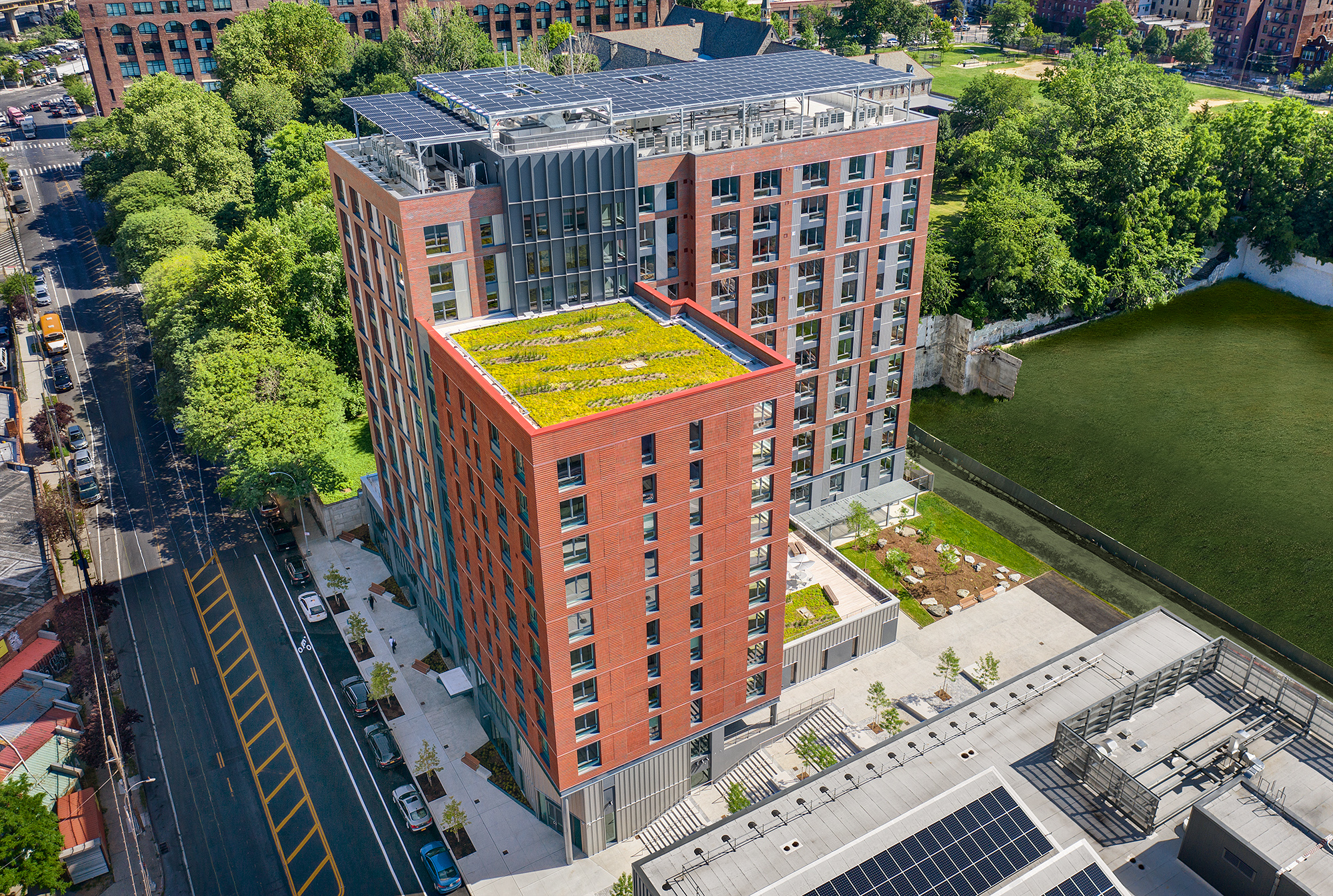
New York already has plenty of mixed-use buildings that can show us what's possible. Beyond the countless buildings that include apartments over a first-floor business, creating vibrant walkable neighborhoods, there are more complex projects showing the broader possibilities of mixed-use development. For example, a mixed-use campus in the Bronx called the Peninsula incorporates affordable housing, a theater, a wellness center, community gathering spaces, and 50,000 square feet of industrial space. The industrial spaces are specifically designed for small start-ups practicing light manufacturing, and they were designed for adaptive reuse over the building's lifetime. The campus is expected to create 175 permanent jobs by the end of its final stage of construction and will host one of Mayor Zohran Mamdani's planned municipal grocery stores in 2027.
Projects like the Peninsula exemplify the benefits of mixed-use development by allowing small businesses to thrive, providing economic flexibility, and bringing businesses closer to their employees and customers. Supporting the development of more mixed-use projects could bring these benefits to more neighborhoods across New York and support entrepreneurship, affordability, and adaptability.
Next Steps
If we want New York to be a place where innovators thrive, small businesses meet the needs of their communities, and our economy responds to market demand, we need to modernize our zoning laws. By ensuring that regulations are consistently updated to address modern economic activity, don't push promising businesses to the sidelines, and support the creation of more flexible buildings, we can build a more adaptable city. With these reforms, zoning regulations will support the businesses of today and be prepared for the changes of tomorrow.
Sources
- nyc.gov/content/planning/pages/zoning/zoning-districts-guide/special-purpose-districts
- manhattan.institute/article/how-to-fix-new-yorks-heavy-handed-zoning-laws
- gza.com/insights/special-mixed-use-districts-new-york-citys-zoning-code
- nyc.gov/assets/planning/downloads/pdf/our-work/plans/citywide/city-of-yes-economic-opportunity/zoning_resilient_economy.pdf
- nyc.gov/assets/planning/download/pdf/planning-level/housing-economy/can-industrial-mixed-use-buildings-work-in-nyc.pdf
- nyc.gov/content/planning/pages/our-work/plans/citywide/city-of-yes-economic-opportunity
- wxystudio.com/projects/the_peninsula_mixed-use_campus
- nyc.gov/mayors-office/news/2026/05/mayor-mamdani-announces-the-peninsula-in-the-bronx-as-the-second
- thepeninsulabx.com
Related Articles
From Abandoned Site to Affordable Housing: The Story of 1024 Fulton Street
A neglected state-owned site in Brooklyn is being transformed into 125 permanently affordable homes. Sabina Hughes tells the story of 1024 Fulton Street and what it reveals about repurposing public land to fight NYC's affordability crisis.
6 min read
Kathy Hochul's "Let Them Build" — Will Environmental Reform Actually Solve NYC's Housing Crisis?
Governor Hochul's 'Let Them Build' agenda promises to streamline environmental review for housing projects. But is faster paperwork enough to solve New York's deeper housing crisis?
7 min read
Office to Residential Conversion: How Boston is Trailblazing the Post-Pandemic Downtown Expansion Initiative
After the COVID-19 pandemic left thousands of office spaces vacant, Boston launched an innovative Office to Residential Conversion Program that's creating affordable housing while revitalizing downtown—and other cities are following suit.
6 min read